The road to Adi Kailash is only open for part of the year, and within that window the weather decides almost everything. Choose the wrong month and you may meet a closed road, a washed-away bridge or a valley full of cloud. Choose well and you get some of the clearest mountain views in the Himalaya.
Here is when the Adi Kailash route opens, how May–June compares with September–October, and what happens during the monsoon break. For the route, costs and permits, see our Adi Kailash bike trip 2027 complete guide.
When does the Adi Kailash route open?
The season is managed by the Pithoragarh district administration, with Kumaon Mandal Vikas Nigam (KMVN) running the official pilgrim batches. The exact dates are announced each spring. In 2026:
- Online processing of Inner Line Permits started on 28 April.
- The gates of the Shiva temple at Jolingkong opened on 1 May, and KMVN's first batches followed in early May.
- Permit issuing was stopped from 2 July because of landslide risk during the monsoon.
- The second phase was planned for 15 September but was pushed to 20 September after the Bailey bridge near Kulagad on the Dharchula–Gunji road was washed away.
- The season then runs until the high road is closed by snow, usually around the end of October or early November.
2027 dates have not been announced yet. If the pattern holds, expect permits to open in late April, the route to open around the start of May, a monsoon break from early July, and a second window from mid or late September. Keep an eye on news from the Pithoragarh administration in April.
May–June: the first window
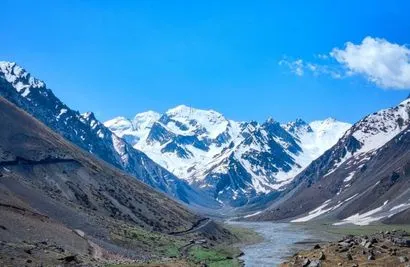
Why go: the season is fresh, the hillsides around Gunji and Kuti are turning green, and there is still plenty of snow on Adi Kailash and Om Parvat. Long daylight hours make it easy to plan riding days.
What to expect:
- Cold mornings and nights at Gunji and Jolingkong, with occasional snowfall early in the season
- Snow-melt streams across the road in the afternoons — cross them in the morning when the water is lower
- The busiest period for permits and homestays, especially from mid-May
- More haze lower down and the first pre-monsoon showers by late June
Best for: riders who want snowy peaks and longer days, and who book early.
September–October: the second window
Why go: after the monsoon the air is washed clean. Late September and October bring the clearest views of the year, deep blue skies and autumn colours in the valleys, with fewer pilgrims than in May and June.
What to expect:
- Colder temperatures, especially at Jolingkong and Nabhidhang — below freezing at night in October
- Fresh landslide scars and repair work after the monsoon; the opening date can slip if bridges or roads need rebuilding, as in 2026
- Shorter days — start early to be off the high road by afternoon
- The season can end suddenly with early snow
Best for: riders who want the best views and quieter roads, and who are prepared for cold.
July–August: the monsoon break
July and August are the months to avoid. Heavy rain sets off landslides along the Kali gorge, rivers rise and wash out sections of road and bridges, and the authorities have stopped issuing permits during this period. Even when the road is open, clouds hide the peaks.
Month by month
| Month | Road status | What it's like |
|---|---|---|
| April | Usually closed; permits open late in the month | Snow on the high road |
| May | Season opens | Cold, snowy peaks, busy from mid-May |
| June | Open | Peak season; first showers late in the month |
| July–August | Monsoon break — permits stopped in 2026 | Landslides, closures, cloud |
| September | Reopens mid to late month, weather permitting | Fresh and green, clearing skies |
| October | Open until snow | Clearest views, cold nights |
| November–March | Closed | Snow and winter cold |
So, which is the best month?
- For snow on the peaks and long days: late May to mid-June.
- For the clearest views and quieter roads: the first three weeks of October.
- To avoid crowds: late September, as soon as the road reopens, or late October — but keep spare days in case the weather turns.
Whichever window you choose, build in at least one spare day. Landslides, snow and permit queues are all part of riding in the Vyas valley.
Ride Adi Kailash with us in 2027
Our 10-day Adi Kailash & Om Parvat bike trip runs from Rishikesh with a ride leader, mechanic, support vehicle and permit assistance. See all dates on the departure calendar. Planning the budget? Read Adi Kailash bike trip cost: full breakdown, and for paperwork see Inner Line Permit for Adi Kailash on a motorcycle.
Frequently asked questions
When does the Adi Kailash yatra open in 2027?
The 2027 dates have not been announced yet. In 2026, permits opened online on 28 April and the Jolingkong temple opened on 1 May; a similar timetable is likely, but confirm with the Pithoragarh administration.
Which is the best month for an Adi Kailash bike trip?
Late May to mid-June for snowy peaks and long days, or early to mid October for the clearest views and quieter roads.
Is Adi Kailash open in July and August?
Generally not. During the 2026 monsoon, permit issuing stopped from 2 July because of landslide risk, and the second phase began only in late September.
When does the Adi Kailash road close for winter?
Usually around the end of October or early November, when snow closes the high road. Early snow can end the season sooner.
How cold is it at Adi Kailash?
Mornings and nights around Jolingkong are cold even in June and drop below freezing in October. Bring warm layers, thermals and good gloves.